

When we think about all the complex systems that come together to make a car function smoothly, the steering system is one of the most critical components.
From turning corners to navigating busy streets, the steering system is what enables us to control our vehicles effectively and safely.
In this article, we'll delve into the intricacies of the steering system in a car, exploring its different types, components, and how they work together to provide a seamless driving experience.
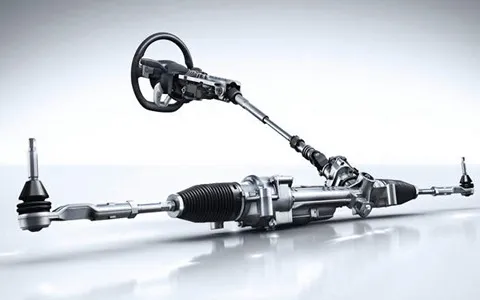
steering system in a car
At its core, the steering system in a car is responsible for translating the driver's input into directional control of the vehicle.
Whether it's a simple turn of the wheel or a more intricate maneuver, the steering system plays a pivotal role in ensuring that the car goes where it's supposed to.
There are several types of steering systems used in cars today, each with its own unique characteristics and advantages.
One of the most common types of steering systems found in modern cars is the rack and pinion system.
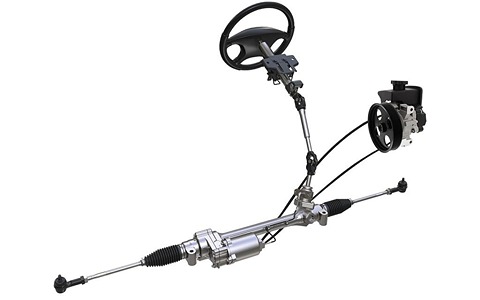
This system consists of a rack, which is a flat metal bar with gear teeth on one side, and a pinion, which is a small gear connected to the steering wheel.
When the driver turns the steering wheel, the pinion rotates, causing the rack to move side to side.
This motion is then transmitted to the wheels through tie rods, allowing the car to turn left or right.
Another type of steering system that is commonly used in larger vehicles such as trucks and SUVs is the recirculating ball system.
In this system, a worm gear is connected to the steering wheel, which engages with a series of recirculating ball bearings.
As the worm gear turns, it causes the ball bearings to move and transmit the steering input to the wheels.
While this system is more robust and can handle heavier loads, it is also more complex and requires more maintenance than a rack and pinion system.
Regardless of the type of steering system used, there are several key components that are essential for its proper functioning.
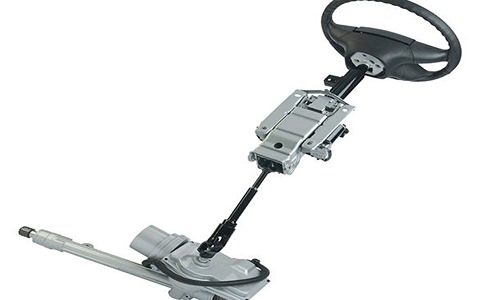
These include the steering wheel, steering column, steering shaft, steering gear, tie rods, and steering knuckles.
The steering wheel is what the driver grips to control the direction of the vehicle, while the steering column houses the steering shaft, which connects the steering wheel to the steering gear.
The steering gear, whether it's a rack and pinion or recirculating ball system, is what translates the rotation of the steering wheel into lateral movement of the wheels.
This is achieved through the use of tie rods, which connect the steering gear to the steering knuckles located at the ends of the wheels.
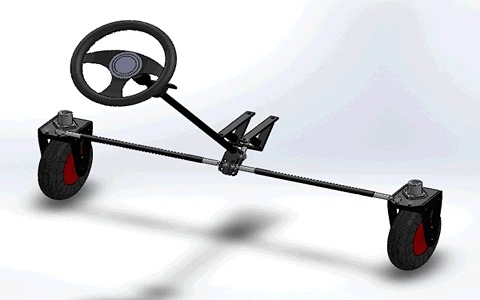
The steering knuckles pivot on ball joints, allowing the wheels to turn left or right in response to the driver's input.