

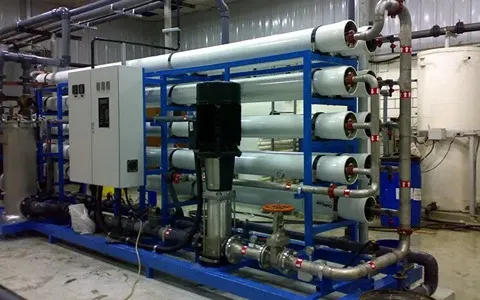
Understanding Industrial Water Purification
With industries consuming vast amounts of water every day, it is paramount to ensure that the water they use is treated and purified to meet strict quality standards.In this comprehensive guide, we will explore the world of industrial water purifiers, their importance, types, working principles, and the benefits they provide.
Read on to discover how industrial water purifiers can play a vital role in ensuring clean and safe water for industries.
Industrial water purification is the process of removing impurities, contaminants, and unwanted substances from water used in manufacturing, processing, cooling, and other industrial applications.
This purification process is necessary to meet regulatory standards, protect equipment, improve efficiency, and safeguard the environment.
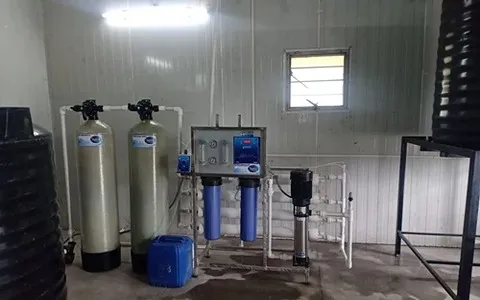
Types of Industrial Water Purifiers
Reverse Osmosis (RO) Systems:
Reverse Osmosis is one of the most popular and effective water purification technologies used in industrial settings.
This process involves passing water through a semi-permeable membrane under high pressure, effectively filtering out contaminants and producing clean water.
RO systems can remove a wide range of impurities, including dissolved solids, heavy metals, bacteria, viruses, and organic compounds.
Ion Exchange Systems:
Ion Exchange is another widely used water purification method in industrial applications.
This process involves the exchange of undesirable ions present in the water with more desirable ions to achieve a specific water quality.
For example, in water softening, ion exchange systems remove hardness-causing calcium and magnesium ions and replace them with sodium or potassium ions.
Activated Carbon Filtration is a popular choice for removing organic compounds, chlorine, and other contaminants that affect taste and odor.
This purification method utilizes activated carbon, which has a large surface area and the ability to adsorb impurities onto its surface.
UV Disinfection Systems:
Ultraviolet (UV) Disinfection is a chemical-free method of water purification that uses UV light to destroy harmful microorganisms such as bacteria, viruses, and protozoa.
This process disrupts their DNA or RNA, rendering them unable to reproduce and cause harm.
UV disinfection systems are often used as a final step in the water purification process to ensure the absence of any remaining pathogens.
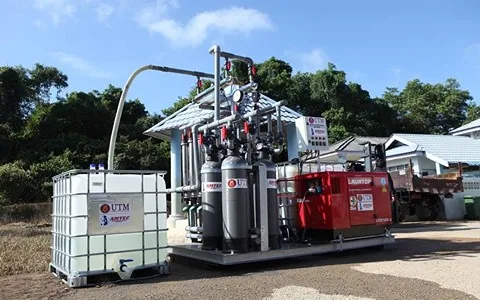
Working Principles of Industrial Water Purifiers
Each type of industrial water purifier operates based on specific principles.
Let's delve into the working principles of the most common types:
Reverse Osmosis Systems:
Reverse Osmosis works by applying high pressure to water, forcing it to pass through a semi-permeable membrane.
This membrane has microscopic pores that allow water molecules to pass through while blocking larger particles, dissolved solids, ions, and other impurities.
The purified water, known as permeate, collects on one side of the membrane, while the concentrated impurities, called brine or reject water, are flushed away.
Ion Exchange Systems:
Ion Exchange systems utilize resin beds that contain small beads with charged ions.
When water passes through these beds, the unwanted ions in the water are exchanged or replaced with desired ions.
The beads can be recharged or regenerated once they become saturated with impurities, making the process sustainable and cost-effective.
Activated Carbon Filtration:
Activated Carbon Filtration relies on adsorption, a process in which impurities in the water stick to the surface of the activated carbon.
The activated carbon has a porous structure, providing a large surface area for contaminants to adhere to.
As water passes through the filter, organic compounds, chlorine, and other impurities are adsorbed, resulting in cleaner and better-tasting water.
UV Disinfection Systems:
UV Disinfection systems function by emitting UV light at a specific wavelength (typically 254 nm) as water flows through a chamber.
The UV light penetrates the microorganisms' cells, altering their DNA or RNA and preventing them from reproducing.
As a result, the microorganisms are effectively neutralized, ensuring the water is safe for use.
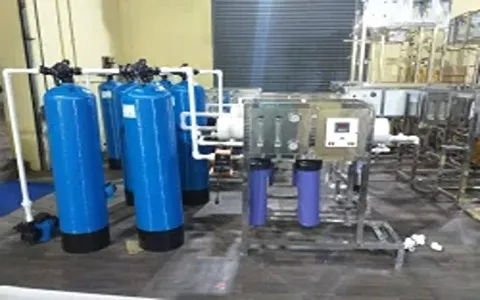
Benefits of Industrial Water Purifiers
Compliance with Regulatory Standards:
Industries are required to meet stringent regulatory standards in terms of water quality.
By employing industrial water purifiers, companies can ensure their water meets the necessary criteria, avoiding costly penalties and reputation damage.
Enhanced Equipment Efficiency:
Impurities present in water can cause scaling, fouling, corrosion, and clogging in industrial equipment.
By purifying the water, industrial water purifiers prevent these issues, leading to improved equipment efficiency, reduced downtime, and increased lifespan.
Cost Savings:
Industrial water purifiers can significantly reduce the need for purchasing bottled water or chemicals for water treatment.
Moreover, by preventing equipment damage and reducing maintenance requirements, businesses can save on repair and replacement costs.
Environmental Sustainability:
Industrial water purifiers contribute to environmental sustainability by minimizing water wastage through efficient treatment processes.
Additionally, by avoiding the discharge of contaminated water into water bodies, these purifiers help protect aquatic ecosystems and promote responsible water usage.