

Different method is used for damask extraction. Some of the qualities of both essential and absolutes oil can be seen in CO2 extracts. Like rose oils, they have a variety of advantageous traits. However, they are not removed using a solvent, unlike absolutes. They are extracted using CO2 (carbon dioxide) gas under pressure and room temperature rather than hexane. When under high pressure, CO2 is compressed until it has the density of a liquid and transforms into supercritical carbon dioxide, which is neither a gas nor a liquid under normal atmospheric conditions. CO2 functions as a "solvent" to extract aromatic oil from plants during this supercritical phase. The beauty of CO2 extraction is that, after the oil has been removed from the plant material, the CO2 can simply be converted back into a gas by reducing pressure, which will cause the gas to dissipate instantly. Rose Damascena, Rose borboniana, Rose centifolia, and Rosa 'Gruss a Teplitz' petals were used in the extraction of rose oil for the current study. Hexane, ether, and steam distillation were used to extract the oil from the petals of the four Rosa species. 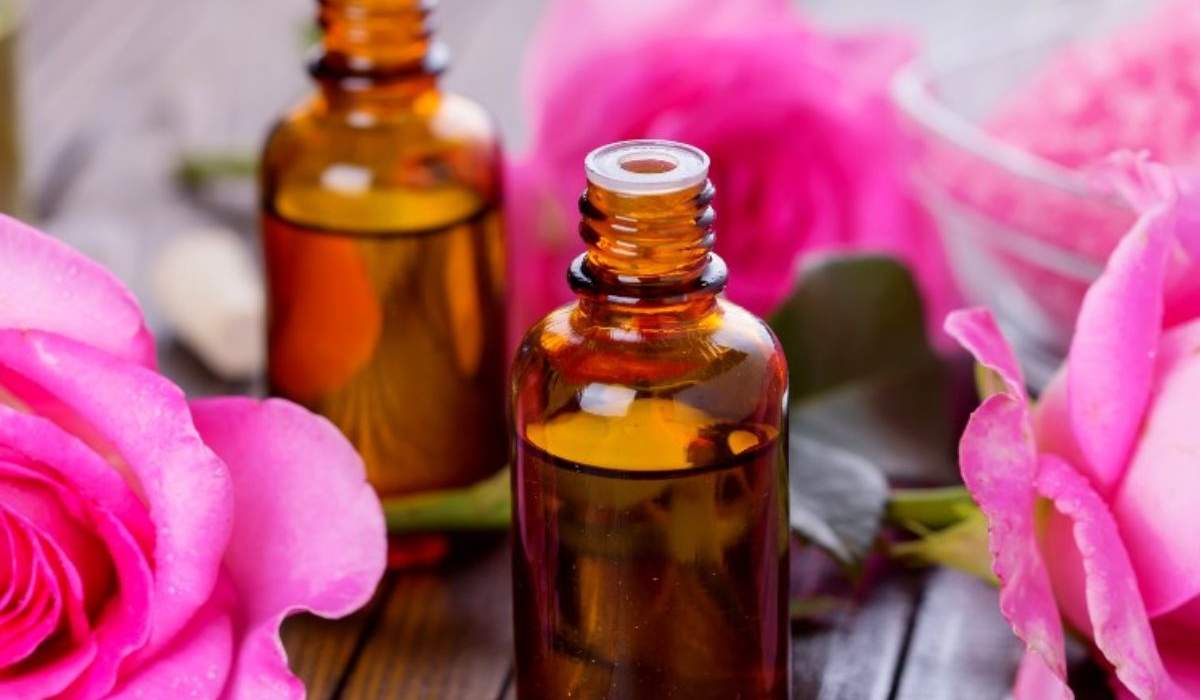 Rose Damascena produced the most absolute oil (0.145%), followed by Rose centifolia (0.11%), and Rose 'Gruss a Teplitz' (0.035%). On a petal weight basis, solvent extraction using hexane produced more absolute oil (0.11%) than steam distillation (0.075%) or solvent extraction using ether (0.07%). To analyze the oil's contents on a qualitative and quantitative level, gas chromatography was used on rose oil. Geranyl acetate, linalool, methyl eugenol, citronellol, phenyl ethyl alcohol, benzaldehyde, geraniol, benzyl alcohol, and rhodinyl acetate were among the most significant substances found. Both methods (solvent extraction and steam distillation) produced oil with variations in the percentage composition of each component, although solvent extraction using hexane was superior to steam distillation for the extraction of essential oil from roses (i.e., higher yield and more components). Sub critical CO2 extracts: what are they? The name may sound a little technical and scientific, but CO2s are quite fascinating, and it is not frightening. A relatively recent approach for the creation of lipophilic plant extracts is CO2 extraction, also known as Supercritical CO2 extraction.
  A chemical substance is said to be lipophilic if it can disintegrate in fats, oils, lipids, and certain solvents like hexane or toluene. The word is Greek in origin and means both "friendly" and "fat." What makes it so good? The beautiful thing about CO2 extraction is that method is far more gentle, leaves no residue in the extract (unlike absolutes like jasmine absolute), and produces essential oils with much more constituents than steamed distilled or hydro-distilled essential oils (Due to the intense heat, many components are destroyed.). The fact that these extracts are sterile and don't require preservation is one of their best qualities. What purpose did CO2 extracts originally serve? As a result, this technique was first created for the food and flavorings sector (e.g., spices, hops, tea, and vegetable oils), and In the fragrance and aromatherapy industries, it is now used for aromatic extracts. It's a massive hit! Great! So how precisely are CO2 extracts made? The chamber containing the botanicals to be extracted is flooded with CO2 (carbon dioxide) gas. The exciting part is here! While still being a gas, carbon dioxide possesses liquid characteristics. Isn't that fantastic? This happens because the CO2 is kept at or over its temperature and critical pressure.
  Where do we get the extract from? As a result of acting as a solvent and becoming saturated with aromatic components, CO2 in its subcritical state. The CO2 is then pushed into a chamber with varying pressure and temperature, and presto, it returns to its original state, leaving the aromatic extract behind. After that, CO2 is recycled. Do I need to know anything else about CO2 extracts? In reality, absolutely. CO2 extracts come in two varieties: Select and Total. At a lower pressure, CO2-se (then choose) extracts have been made (80–140 bar). CO2 Choose extracts are comparable to essential oils but typically have a viscosity that is much higher. They function and are composed similarly to steam/hydro distilled essential oils, however they are significantly more volatile than steam distilled extracts. High pressures (up to 550 bar) are used to create CO2-to (total) extracts, which contain all CO2-soluble lipophilic plant components, such as fatty and essential oils, lipophilic antioxidants, carotenoids, tocopherols, sterols, other bioactive components, resinoids, and waxes. As a result, the extract resembles the plant in a very close way. CO2 Totals are typically solid or thick and pasty. In this article, we investigated the use of the co2 extraction emerging method
  Our business is in the field of manufacturing and thanks to the wide range of products we offer, we have a very good reputation in various markets. We offer a wide range of rose-derived products, including rose water, that are of the highest possible quality. To familiarize you with our production method, we have provided a description of the distillation process used to prepare rose water.
hi
We have started working in the field of rose oil production using the supercritical co2 method, the first sample was extracted and refined, what are the important technical and laboratory characteristics in the quality of rose oil? Can we cooperate in terms of product sales?
0
0